True Winter hair colors are frequently reduced to jet black, but black is only one way to keep a clear frame around the face. Deep brown, restrained highlights and a careful root transition can give different versions of the same contrast. Before changing anything, separate what you like about a reference: its depth, its coolness or its glossy finish. The True Winter label is a styling framework with varying definitions, so use it to organize experiments rather than as a rule that overrides your own comparison.
Start at the root rather than the darkest swatch
Look at a small area of natural growth in indirect daylight. Compare it with the brows and the older lengths. Your root is a useful baseline even if it is not the shade you ultimately want. It helps you see whether the proposed change is mainly a cooler tone, a deeper color or both. A photo taken after years of dye may otherwise hide that distinction.
Natural hair is not a single block of color. Individual strands, light reflection and the way layers overlap create variation. A filter that makes every part uniformly black can remove those cues, leaving a result that looks like a cutout. Judge the preview cautiously if it cannot preserve shine and texture. Flat rendering is not evidence that every dark shade will look flat in life.
Seasonal language does not require a particular complexion, eye color or ancestry. The relevant comparison is how the proposed shade relates to your own features. Nor does a Winter label mean you must make your natural hair darker. If the current depth already frames your face well, a restrained tonal adjustment may give you the change you wanted.
Decide whether black adds something espresso does not
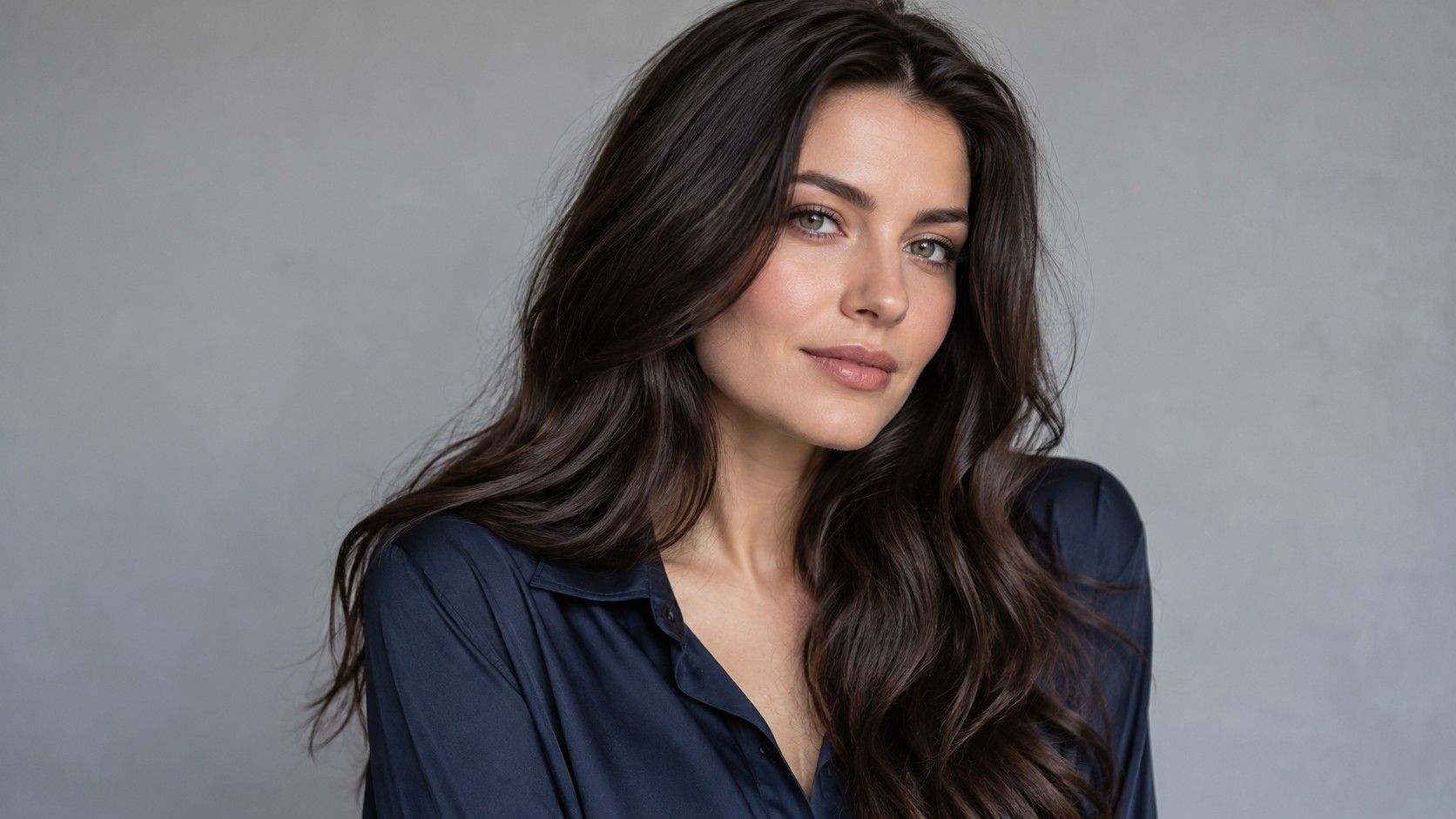
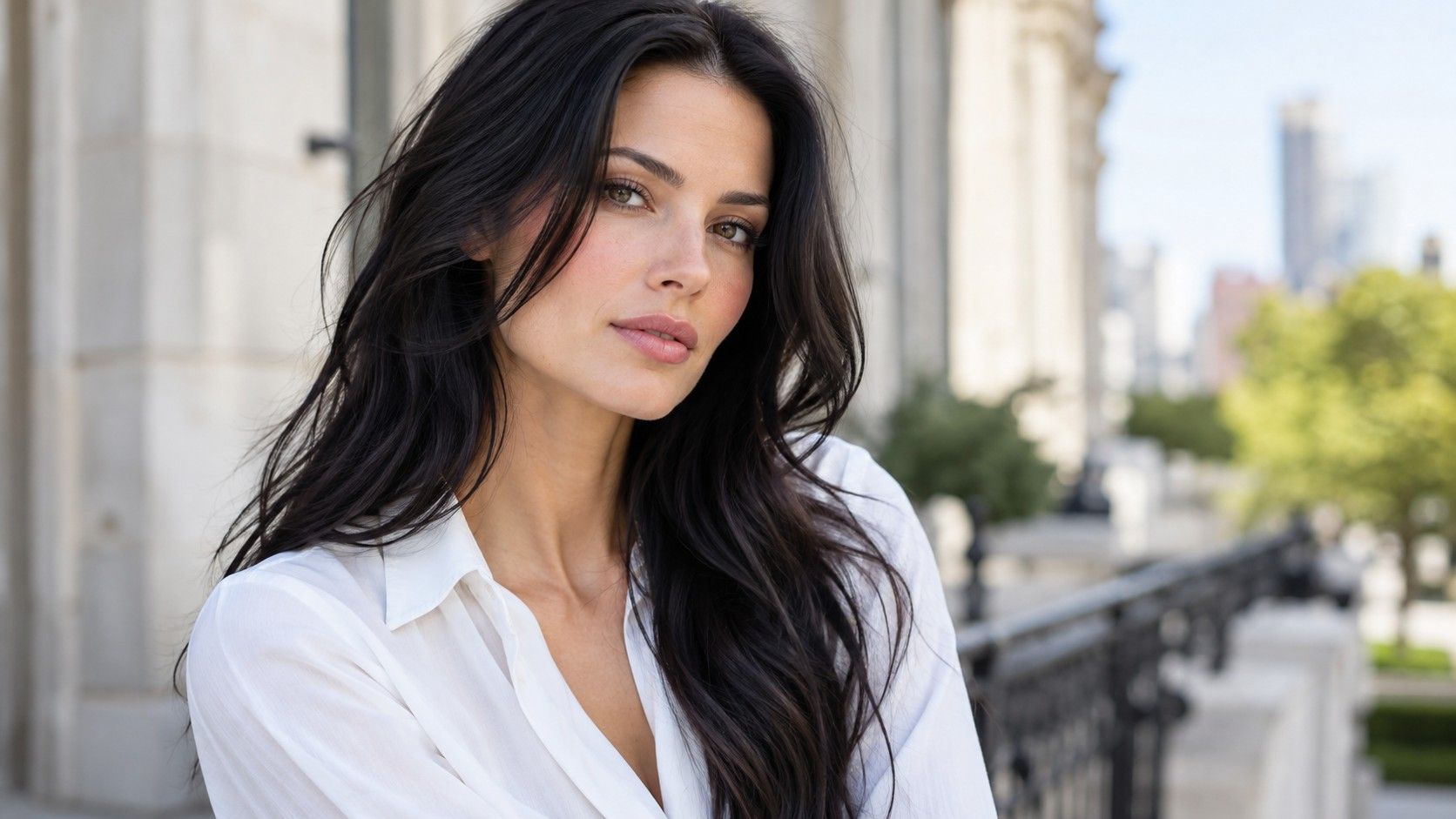
Put an espresso-brown preview beside a soft-black one, using the same photograph and similar shine. At first glance the difference may seem small. Look at the hairline, the fringe and the sections touching the neck. Brown often shows more depth variation there; black gives a more definite outline. Decide whether that stronger outline improves the whole picture or simply makes the hair more noticeable.
One practical test is to view both versions at arm’s length. Can you still see the expression in your eyes before your attention lands on the hair? Then check with the hair pulled away from the cheeks. The result should not depend entirely on one curtain of hair framing the face. A dark shade has to work with the ways you normally wear it.
| Reference | What to notice | Reason to pause |
|---|---|---|
| Neutral deep brown | Definition without losing visible brown | The reference reads strongly red in daylight |
| Espresso | Near-black depth with subtle variation | The name is being used for a much warmer shade |
| Soft black | A crisp edge with a less overt blue cast | The preview hides all layers and texture |
| Blue-black | A deliberate reflective cool tone | You like it only under colored studio lights |
Ask what the chosen image means in a real consultation. Depth names are descriptive shorthand, not interchangeable instructions. A colorist needs to see the reference and the current hair together, including previous dark color, lightened sections and areas that have faded differently.
Keep dimension without adding a golden stripe
If solid dark hair feels too heavy, first compare subtle differences in brown rather than a bright blonde panel. Fine variation can show the shape of a wave or layer while leaving the overall frame dark. Keep the lightest section close enough to the base that the effect reads as movement, unless a high-contrast design is deliberately what you want.
Highlight placement changes the result as much as the shade itself. A light piece at the front may become the dominant feature beside the face. The same color placed farther back can be less conspicuous. Check a reference with a similar haircut and parting to yours. Otherwise you may be responding to the placement in the picture more than the proposed color.
Cool dimension also needs to be described visually. Beige-brown, neutral-brown and ash-brown pieces can look quite different, even when all are presented as suitable True Winter hair colors. Show the amount of separation you want and identify any orange or yellow effect you would prefer to avoid. That is clearer than asking for highlights that are simply winter appropriate.
Read blonde previews without losing the original contrast
True Winter blonde hair is a useful search for ideas, but a collection of icy portraits cannot tell you whether all-over blonde is your best change. A pale frame can reduce the difference between hair and skin, or create a different contrast with dark brows. Neither effect is automatically wrong. Compare the whole face with your original photo and decide which relationship you actually prefer.
Keep the root visible in at least one version. A pale blonde with a deep root is a different design from a uniform pale blonde, and the distinction affects both appearance and upkeep. Compare the edge around the forehead, then the ends. If you like the light lengths but dislike the pale hairline, a placement discussion may be more useful than rejecting blonde altogether.
A major lightening change requires an assessment beyond seasonal analysis. Existing color, the state of the lengths and previous treatments affect the available options. Ask about the process, intermediate appearances and what happens if the desired lightness is not suitable immediately. A try-on result cannot answer those questions, however convincing its lighting may be.
Remove exposure bias before choosing a winner
Camera exposure can make dark hair look like a featureless mass while brightening the face. Another app may brighten the hair and alter the skin at the same time. Compare options made from one unchanged original. Check the background and lips: if they shift between versions, you may be judging broader image edits rather than a hair-color difference.
Take a second reference near another window or at a different time in soft daylight. Keep direct sun and heavily colored walls out of the comparison where possible. You do not need a perfect technical setup; you need enough consistency to notice when a favorite only works under one unusual light. Avoid using a single warm evening selfie as the final deciding image.
For the consultation, save the original, the preferred dark option and a lighter alternative. Add a short note about what matters: visible brown outdoors, a neutral hairline, subtle dimension or less contrast at the roots. Leave room for a professional assessment of the starting hair instead of treating the edited color as a guaranteed outcome.
If espresso and black remain equally appealing, consider the smaller departure from your present color first. Discuss future lightening before choosing a deeper permanent change, and follow the relevant product instructions for any coloring process. The best hair color for True Winter is not a test you pass by picking the darkest swatch. It is a considered choice that still looks convincing with your usual clothes, ordinary lighting and normal maintenance routine.
Consider the ends as well as the hairline when comparing deep shades. Older lightened ends may look more transparent than new growth, and a phone preview often covers that difference completely. Keep one untreated original where the unevenness is visible. It helps explain whether you want an even finish or prefer some lighter movement to remain. A picture that hides your starting point can be attractive inspiration, but it leaves out information needed to plan the actual change.