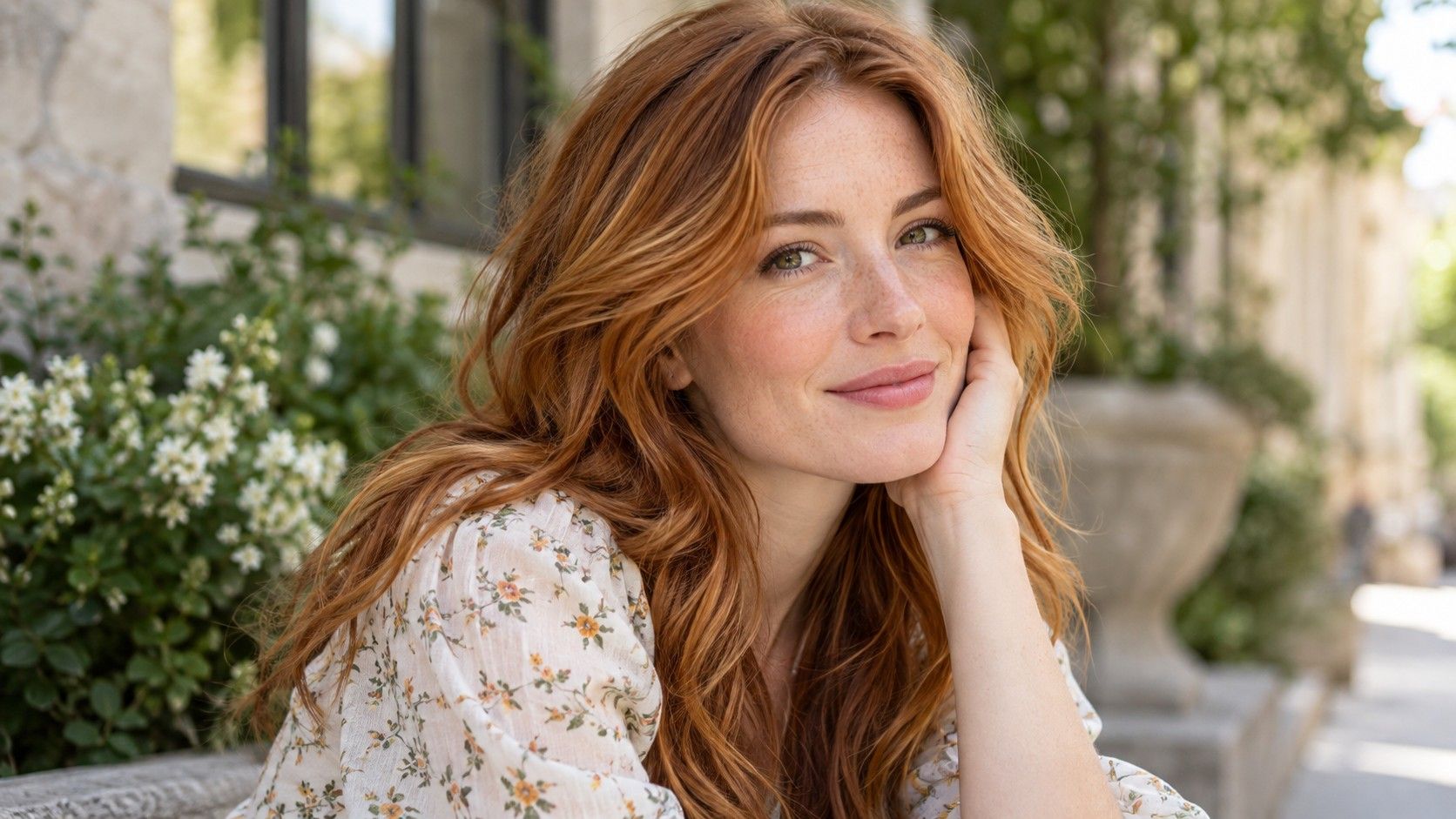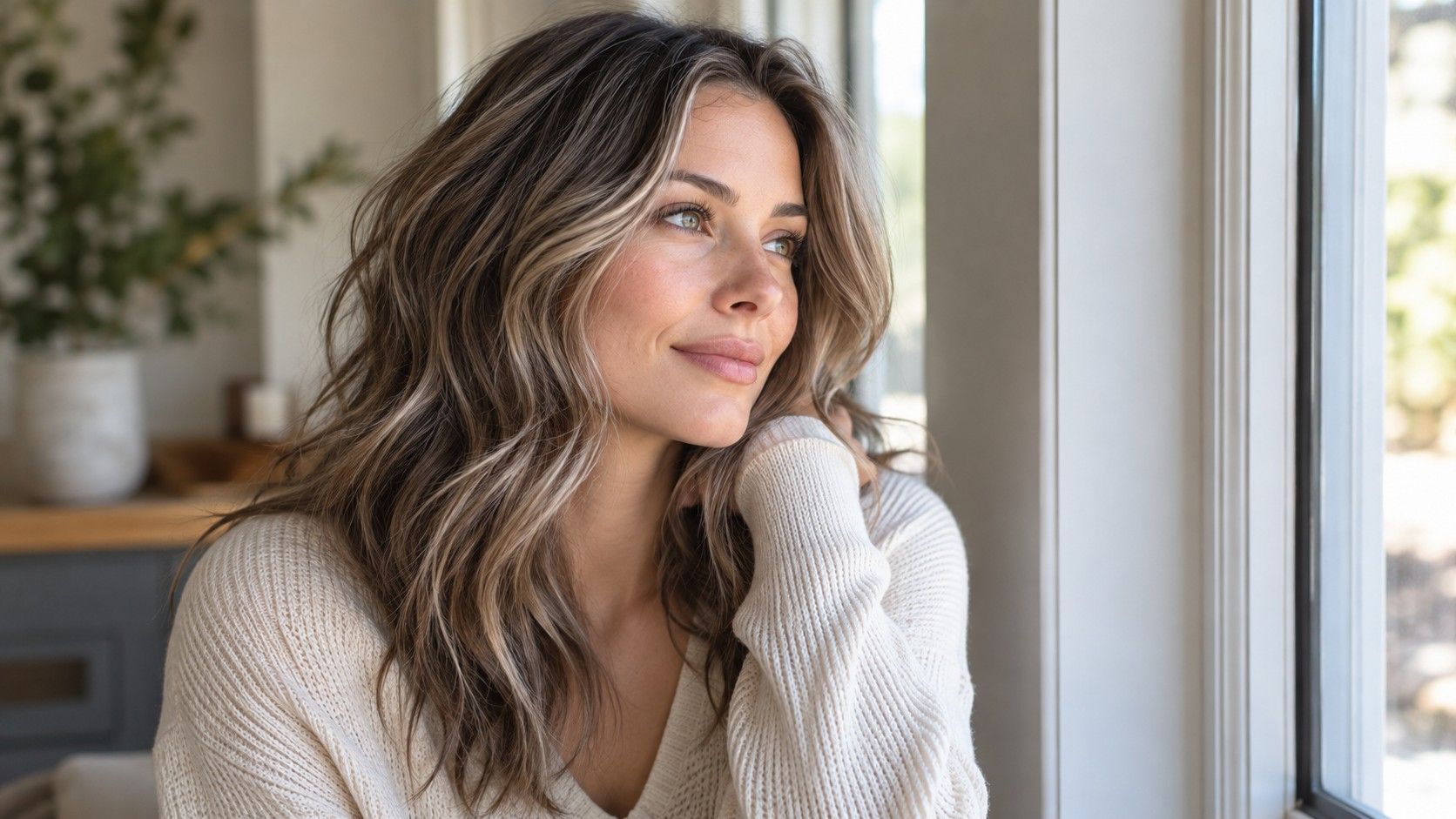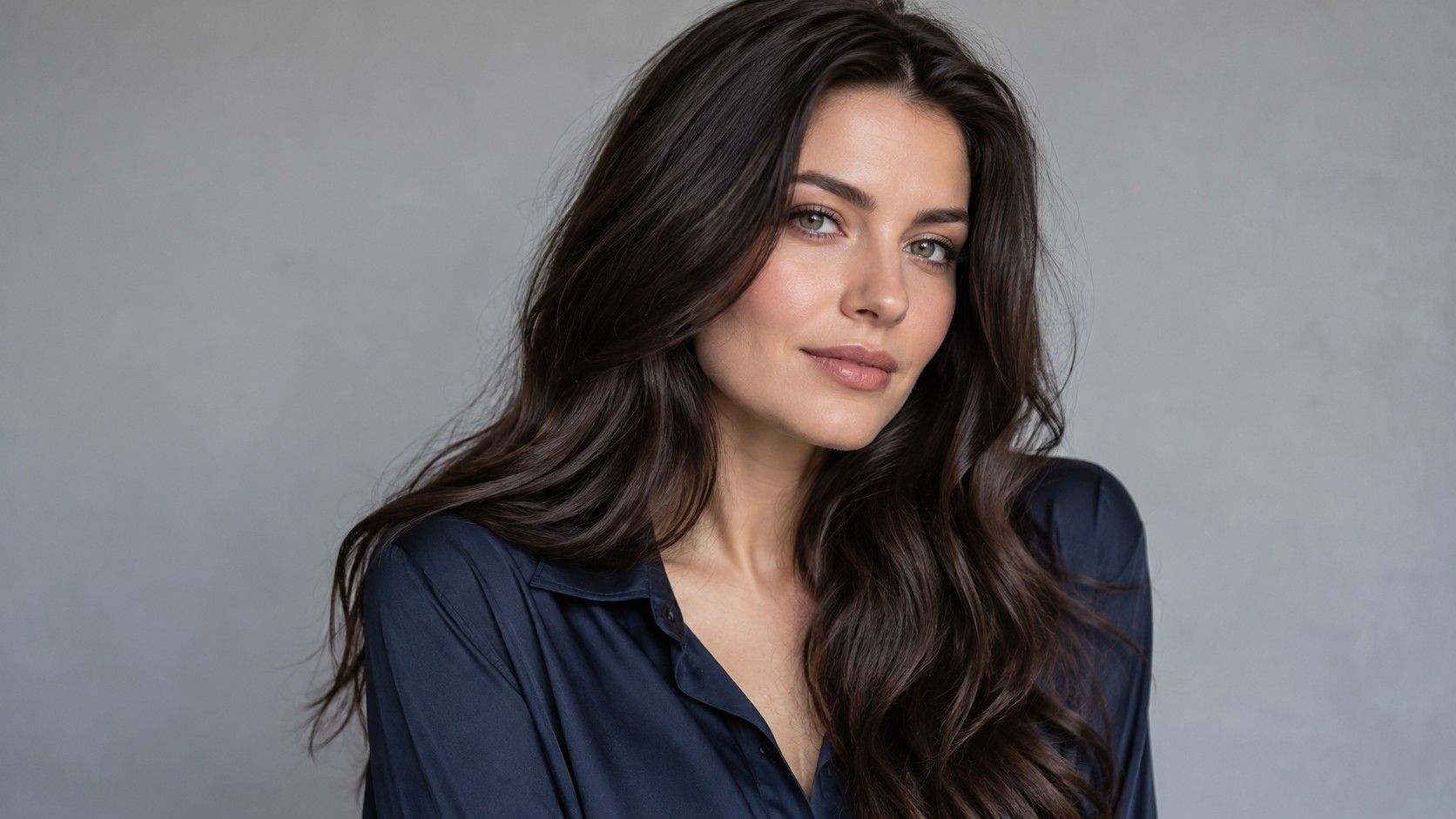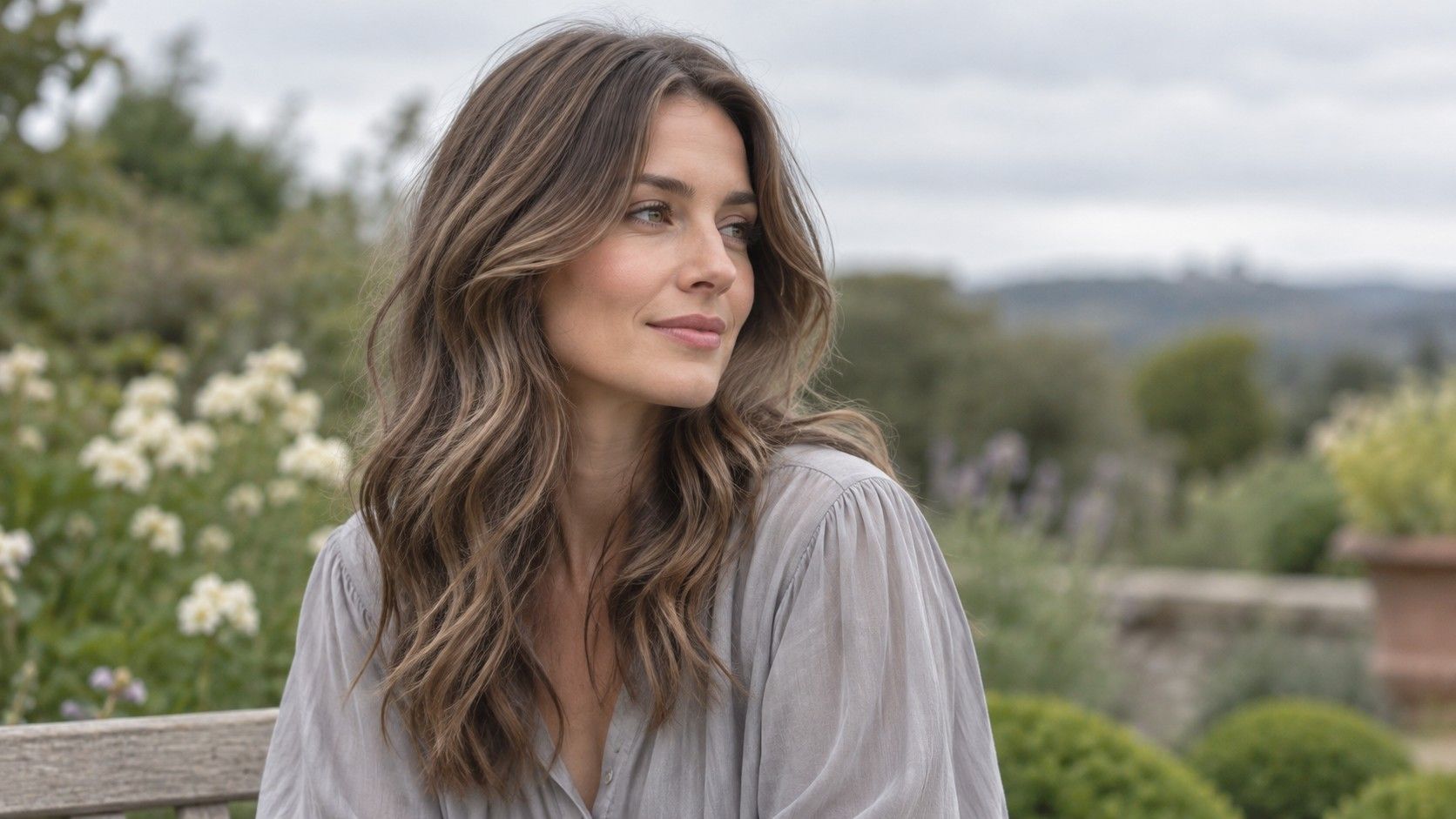
Soft Summer hair colors are usually discussed in terms of muted, cool-leaning shades and gentle transitions. That language can help you describe an effect, but it does not prescribe one correct brown or blonde. Treat the palette as a starting point for comparison. The useful question is whether a quieter tone and less abrupt contrast suit the look you want, at a depth and maintenance level that make sense for your own hair.
Use the palette to describe a direction
In seasonal styling, Soft Summer commonly refers to a subdued, cool-leaning palette. “Soft” describes a muted effect rather than a requirement for light hair. A medium brunette can look understated when its dimension is close in depth, while a very pale blonde can create a strong contrast with darker roots. Tone, depth and placement need separate attention.
Look at your natural regrowth in indirect daylight before choosing a reference. Notice whether the current lengths are warmer or lighter than the roots. Old dye and exposure can make your present color a poor guide to your natural starting point. Write down that difference rather than assuming the whole head belongs to one shade family.
You do not need to prove that you are a Soft Summer before comparing these ideas. Seasonal categories are ways of organizing styling preferences, not a diagnosis from eye color or a single photograph. If muted neutral brown appeals to you but a strict palette rule says otherwise, keep the real comparison in view. The label should help you explain the choice.
Take a face photograph without a strong beauty filter and compare a near-natural color with one softer, cooler direction. Keep the exposure and depth similar. If the cooler version is also dramatically lighter, you will be testing two changes at once. That makes it difficult to identify what you actually enjoy.
Choose a brunette with movement rather than a flat overlay
Muted brown, mushroom brown and soft neutral brunette are useful search descriptions for reference images. They are not standardized formulas. One photograph labeled mushroom brown may be fairly light and beige, while another is deeper and noticeably ash. Show the actual image and describe the element you want rather than relying on the name alone.
For a brunette close to your natural depth, compare a neutral option with a cooler option. Look for light and shadow through the lengths. A single opaque color in a digital preview can hide the dimension that makes a real brunette feel soft. Small shifts within the same general depth may communicate the intended effect better than a large light-dark contrast.
Consider whether the lighter pieces begin near the root or farther down. A softer root transition may appeal if you want the regrowth to feel less abrupt, but the result depends on your starting color and placement. Ask a colorist to explain the likely grow-out for the actual design. “Low maintenance” is too vague to settle that question.
If your natural hair is quite deep, a muted brunette does not have to become much lighter to fit your inspiration. You might prefer subtle dimension at your current depth. Keep a reference showing that possibility beside any lighter options so the consultation does not drift toward an extensive change you never intended.
Compare beige blonde with cooler blonde at equal depth
For lighter Soft Summer hair color ideas, compare a subdued beige blonde, a neutral dark blonde and a cooler blonde with visible shadow. These descriptions overlap in everyday use, so inspect the pictures rather than treating the names as separate technical categories. A balanced beige can have some warmth without reading as a bright golden statement.
Use versions of similar brightness to evaluate tone. A very pale icy blonde may win a comparison simply because it is much lighter and more striking. Put it beside another blonde of comparable depth before deciding that coolness is the feature you prefer. Look around the brow area and hairline, where the contrast is easiest to notice.
Ask whether you want brightness across the whole head or only in selected pieces. A few lighter areas around the face can create a different effect from pale lengths with a deep root. Keep both front and side references if possible. The placement may be the part that makes your inspiration feel soft.
Be realistic about the starting base. A blonde preview over old dark dye does not show the work required to approach it. If a colorist expects an intermediate shade, ask to see a realistic reference for that stage. You should feel comfortable with the route as well as with the final photograph.
Do not make ash the answer to every warm area
“Cool-leaning” can easily turn into “as ash as possible” when browsing inspiration boards. Those are different choices. A heavily muted preview may remove so much visible warmth and dimension that the hair looks flat against the face. Compare it with a more neutral version before assuming that stronger ash will produce a softer result.
Light matters here. Warm indoor bulbs can make a neutral shade appear golden, while some photographs push pale shades toward gray. Look at more than one ordinary image of the reference color if available. A single edited salon photograph is useful inspiration but incomplete evidence of how the hair might read in daily surroundings.
If your current hair looks too warm, identify where: roots, mid-lengths, ends or isolated highlights. A precise description is more useful than asking to remove all warmth everywhere. Different areas may have different histories, and a blanket correction may not match the dimensional result in your reference.
Leave the product selection and formula discussion to someone who can assess the actual hair, or follow the instructions for a specific home product. A seasonal palette does not tell you what is already in the hair or how it will respond. Avoid treating an ash shade name as a universal correction recipe.
Build a shortlist with a manageable amount of change
For the first option, stay close to your current depth and adjust the visual tone toward neutral or slightly cooler. For the second, add a little dimension in a way you could explain. For the third, consider a lighter or deeper direction only if you want that degree of change. This creates useful alternatives instead of three nearly identical screenshots.
Write down what each option preserves. Perhaps you want to keep a natural root, retain some lighter ends or avoid a strong stripe near the face. Then name the one thing you want to change. A short description such as “medium neutral brown with fine, softly blended lighter pieces” travels better than a palette label by itself.
Compare all three on the same unedited face photo if using a preview tool. Inspect the hairline and texture before judging them. A filter that recolors skin beside the temple or smooths every strand can create a flattering impression that will not transfer to real hair. Save the untouched image with the shortlist.
Allow yourself to choose a shade outside the strict inspiration set. The best hair color for Soft Summer is a personal styling decision shaped by your starting color, preferred contrast and routine. A seasonal chart can suggest possibilities; it cannot weigh your willingness to maintain them.
Plan the move from existing warmth with a colorist
Bring a history of color applications, approximate dates and any lightening you remember. Include photographs of the current roots and ends in ordinary daylight. Explain which warmth you want to soften and which dimension you want to keep. If you do not know what was previously used, state that clearly instead of guessing a formula.
Ask how close the first appointment can reasonably come to the reference, what an intermediate result may look like and what follow-up might be needed. Discuss fading and regrowth as part of the plan. The most suitable option may be a restrained change that leaves room to assess the result before moving farther.
If coloring at home, read and follow the specific label, including its testing directions. Neither a Soft Summer classification nor a successful photo preview provides safety information. Finish the decision with a clear description of tone, depth, placement and upkeep. Those four details give you something concrete to assess when the color is finally on your own hair.