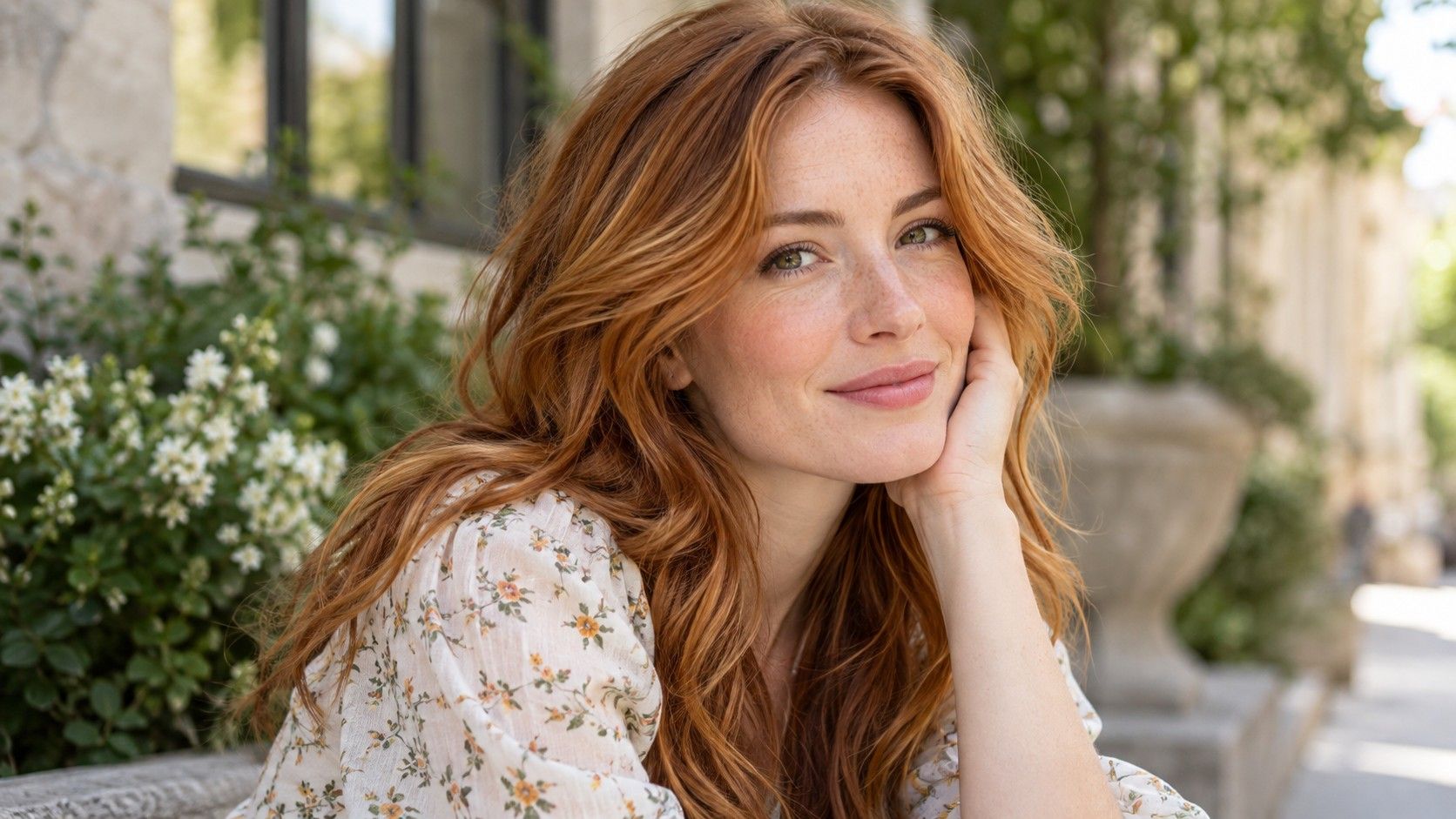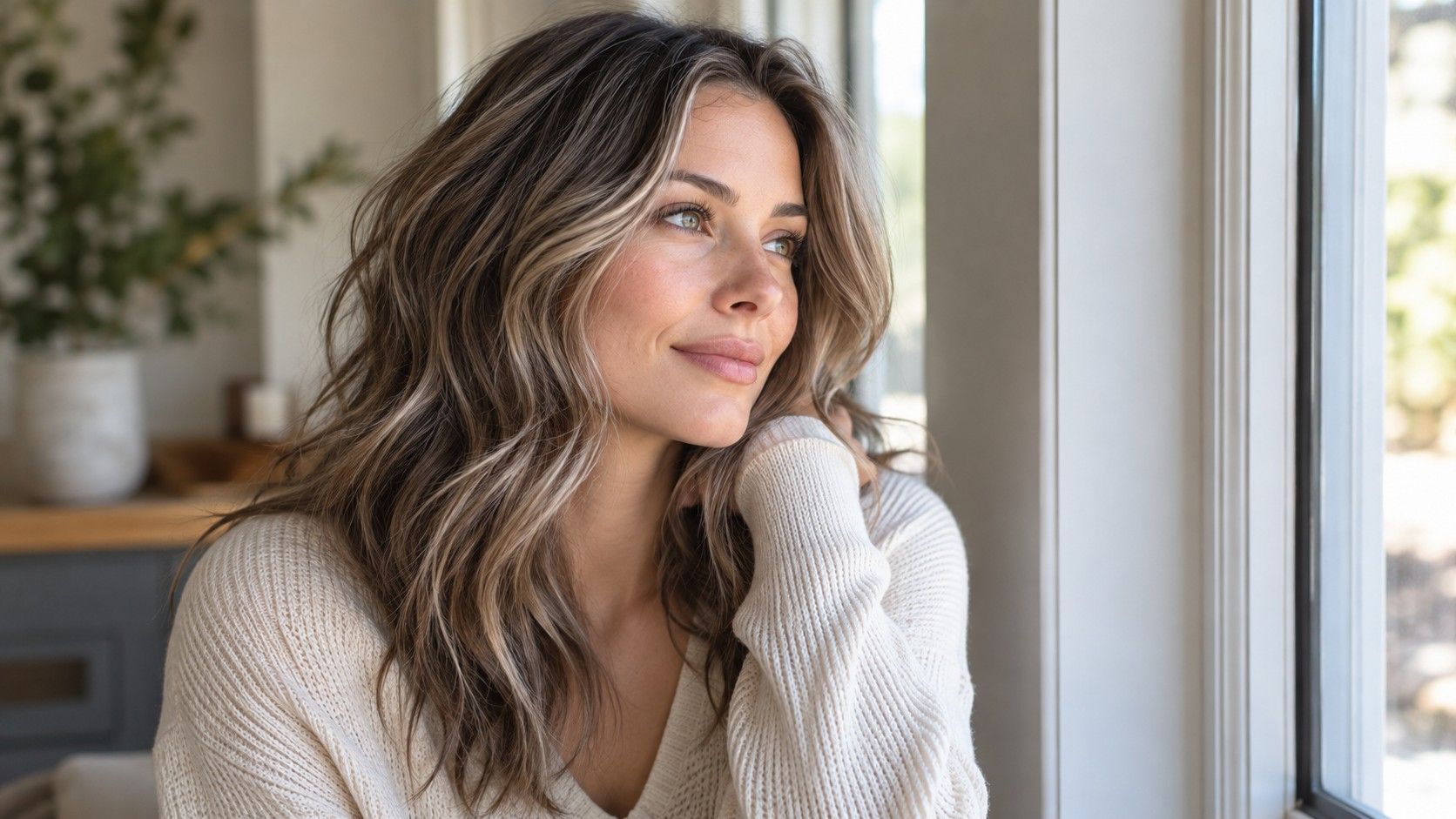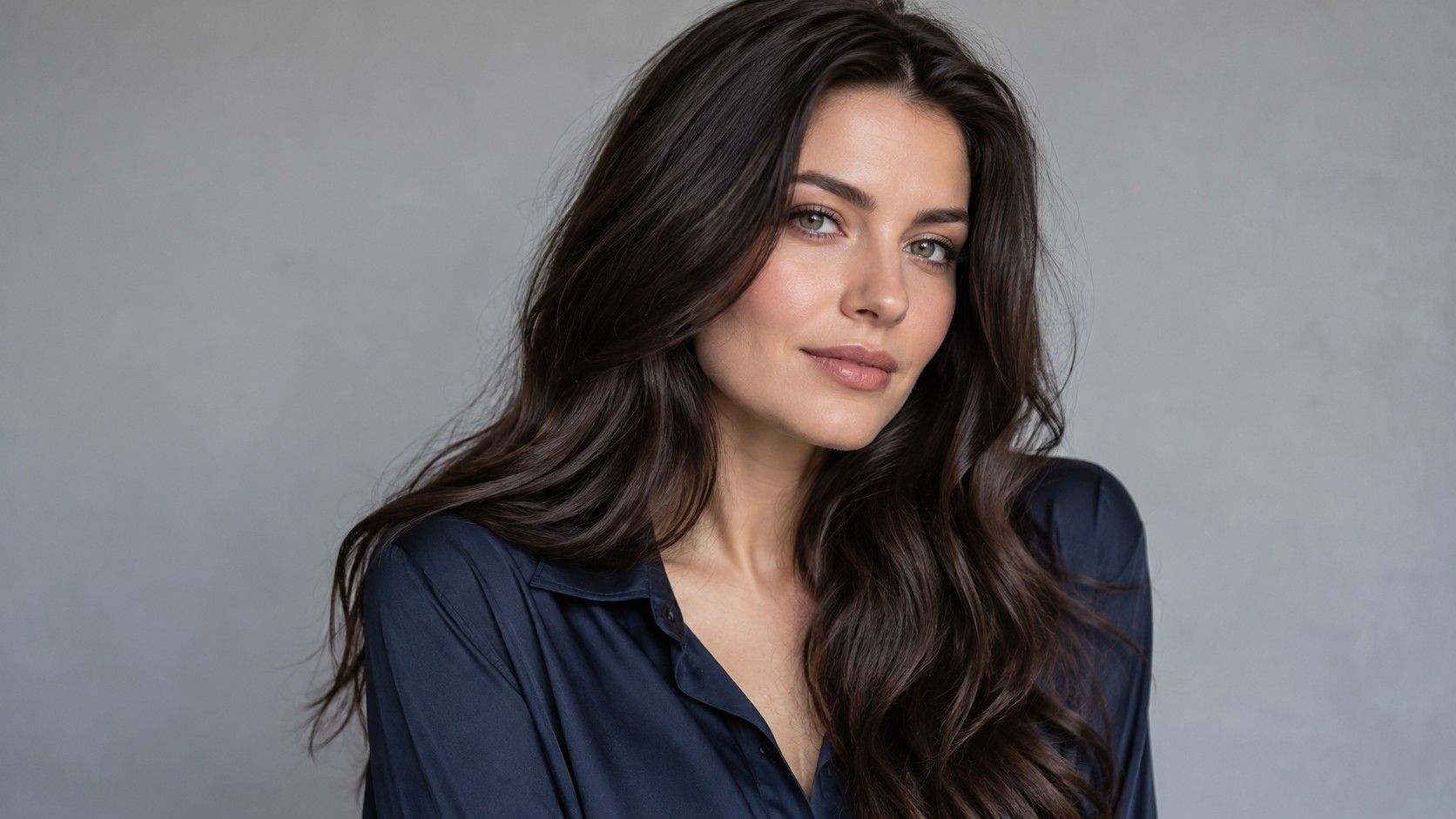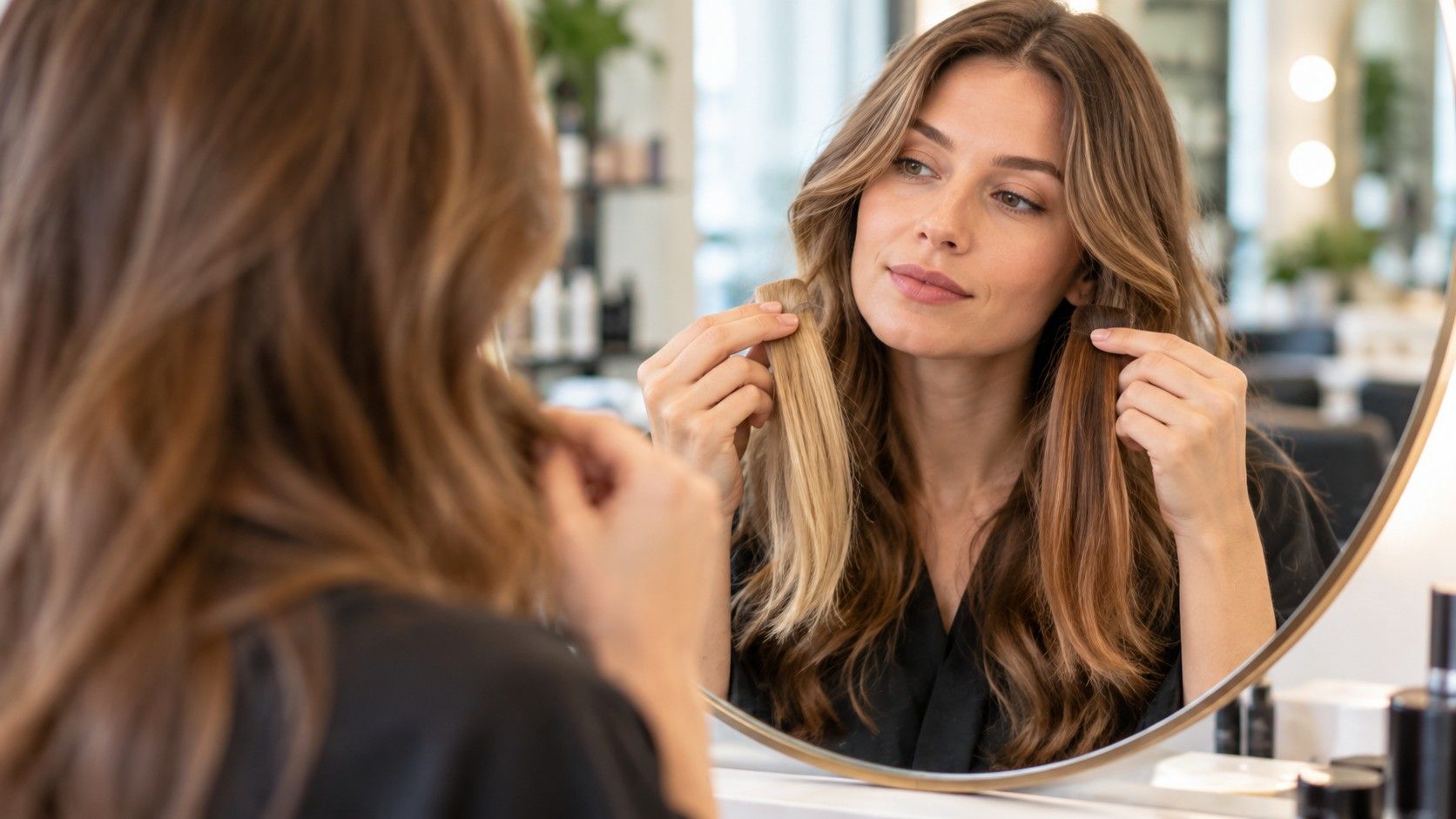
A hair color quiz can organize your preferences, but the score should not choose a box of dye for you. Useful questions separate what your hair looks like now, what effect you want and how much upkeep you can manage. This written check works best with a daylight photo and a few notes about previous color. There is no final personality type to unlock: your answers should produce a clear direction and show where you still need help.
Answer the starting-color question from your roots
What color is your natural regrowth in indirect daylight? Look near the parting and temples, then compare that area with the lengths. If the ends are much lighter or warmer, record both observations. A single answer such as “light brown” can hide a substantial difference between the hair growing now and the color you have been maintaining.
If your roots are not visible, use the most recent reliable description you have and label it uncertain. Old photographs can be useful, but sun exposure, camera processing and childhood color make them imperfect evidence. Do not reconstruct an exact natural level from a favorite holiday picture. Plain words are sufficient for this stage.
Next ask what is already on the hair. Write down approximate dates and areas of permanent color, lightening or vivid shade applications. “I do not know” is a valid answer. Your hair color tester cannot identify a previous formula from a picture, and your next color choice may depend as much on that history as on your preferred swatch.
Ask about tone with comparisons instead of shortcuts
Which do you prefer beside your face: a warmer brown, a cooler brown or a neutral brown of similar depth? Compare them using the same photograph. If the warm option is also much brighter, repeat with a closer match. Otherwise your answer may describe a liking for brightness rather than warmth.
Vein color and a single jewelry comparison are often presented as decisive undertone questions. They can be hard to interpret and should not carry the whole decision. Light, surface redness and personal preference affect what you notice. Look for a repeated preference across several fair comparisons instead of forcing an answer because a quiz requires one.
Leave room for “both” or “uncertain.” Someone can enjoy a warm hair color without wanting warm clothing everywhere around the face. Seasonal terms may help describe a visual effect, but they are styling vocabulary rather than a diagnosis. You can use them to start a discussion while keeping the actual photographs in front of you.
An online hair colour test is more useful when it explains its assumptions. If it jumps from eye color to a precise shade without showing the comparison, treat that result as a suggestion to test. The confidence of the wording does not add information about your hair, its previous color or your preferred maintenance routine.
Choose the contrast you want on an ordinary day
Would you like the hair to blend quietly with your features or create a stronger frame? Look at your normal face photograph, including whatever makeup you generally wear. A dark option may make the outline more prominent; a lighter option may shift the balance in another direction. Neither effect is automatically more flattering.
Ask a second question: do you want that contrast everywhere, or only in selected areas? A brighter face-framing section, deeper root and all-over change can lead to different visual results. A simple quiz may group them under one color name, so add a note about placement. Often the placement explains what you like more precisely than “blonde.”
Check your answer with your hair both down and tied back if those are normal styles for you. The amount of color beside your face changes when the hair moves. A shade that works in a carefully arranged portrait may feel different around a bare hairline. You are choosing for your routine, not for one flattering angle.
Make the upkeep question specific enough to matter
How visible a regrowth line are you comfortable seeing? Compare the planned depth with your natural roots rather than answering only “low maintenance.” A major difference can be more noticeable as new hair appears. Placement and root treatment affect that impression too, so discuss them rather than assuming all highlights grow out the same way.
What appointments, styling and home care are you realistically prepared to keep up? There is no universal schedule that applies to every head of hair or every color service. Ask a colorist for the likely routine for your proposed result. Include travel, budget and how you feel about a faded version of the shade when deciding whether it fits.
Would you enjoy an intermediate stage if the full change takes time? This question matters when the inspiration image is much lighter than previously colored hair. A preview can make the switch instantaneous, while the real route may be more involved. If you would dislike every stage except the final picture, say that before choosing a plan.
Also ask how much of your current dimension you want to keep. An all-over shade might simplify the look while losing lighter pieces you actually like. Record both the attraction and the compromise. The best hair color test is one that helps you notice those trade-offs while the change is still only an idea.
Turn the answers into three working options
Build the first option around your most consistent answer. For example, if you like your depth but dislike golden ends, investigate a tone adjustment rather than assuming you need a new overall color. If your main goal is a stronger frame around the face, test depth before browsing dozens of red and blonde shade names.
Let the second option change one additional variable, such as slightly lighter placement or a more neutral tone. Keep the third for a larger idea you genuinely want to explore. Beside each image, write what works and what you would accept changing. “Keep this root depth, reduce the bright ends” is a useful instruction for a consultation.
A hair color tester app can help visualize those choices, but use one unchanged photograph for all three. Inspect the hairline and the skin to make sure the tool is not changing the face along with the hair. Save your original as well. The result should communicate your preference without pretending to forecast the exact finished shade.
Keep a separate note for answers driven by curiosity. Wanting to see a vivid red once is different from wanting to maintain it. Both are reasonable interests, but they should lead to different next steps: another preview for the first, a practical consultation for the second.
Read the uncertain answers before choosing dye
If several answers remain uncertain, that is useful information. Perhaps the light is poor, your hair history is complicated, or you like more than one style. Do not let a forced score erase those issues. Take the unclear parts to a colorist along with the clear ones, and ask what further assessment would make the choice more reliable.
For a home product, use the instructions on the specific package rather than instructions inferred from a quiz. Follow its testing directions and do not treat a favorable photograph as evidence of suitability for skin or hair. A strand assessment and an appearance preview answer different questions; one cannot stand in for the other.
Revisit the notes after looking away from the screen. You should be able to describe the proposed change in a sentence: the depth, the tone, the placement and the upkeep you accept. If all you can recall is a quiz score, return to the comparisons. A useful result is a decision you understand well enough to question and refine.