The best hair color for olive skin depends on more than whether a shade is warm or cool. Depth, brightness and the color already in your hair can change the effect beside your face. Build a shortlist with those differences in mind, then compare it in ordinary daylight before committing to dye.
Check what olive means in your own photographs
Olive describes a visible greenish or grayish cast within skin, but it does not tell you how light or dark your complexion is. Nor does it settle the warm-versus-cool question. Two people who both use an olive foundation may prefer quite different hair colors. Treat the label as a useful starting observation, rather than a rule that excludes half the shade chart.
Use a photograph taken facing a window, away from direct sun and colored walls. A yellow bathroom bulb can make a neutral brunette look golden; green foliage reflected through glass can alter the skin itself. Check the neck and jaw as well as the cheeks. Temporary redness in the center of the face is a poor basis for choosing a permanent hair color.
Keep one unedited photograph as the control. If a virtual preview smooths your skin, brightens your eyes or changes exposure when you switch shades, the comparison is compromised. You may be responding to the retouching. A plain image with visible skin texture is more useful than a polished portrait for this particular decision.
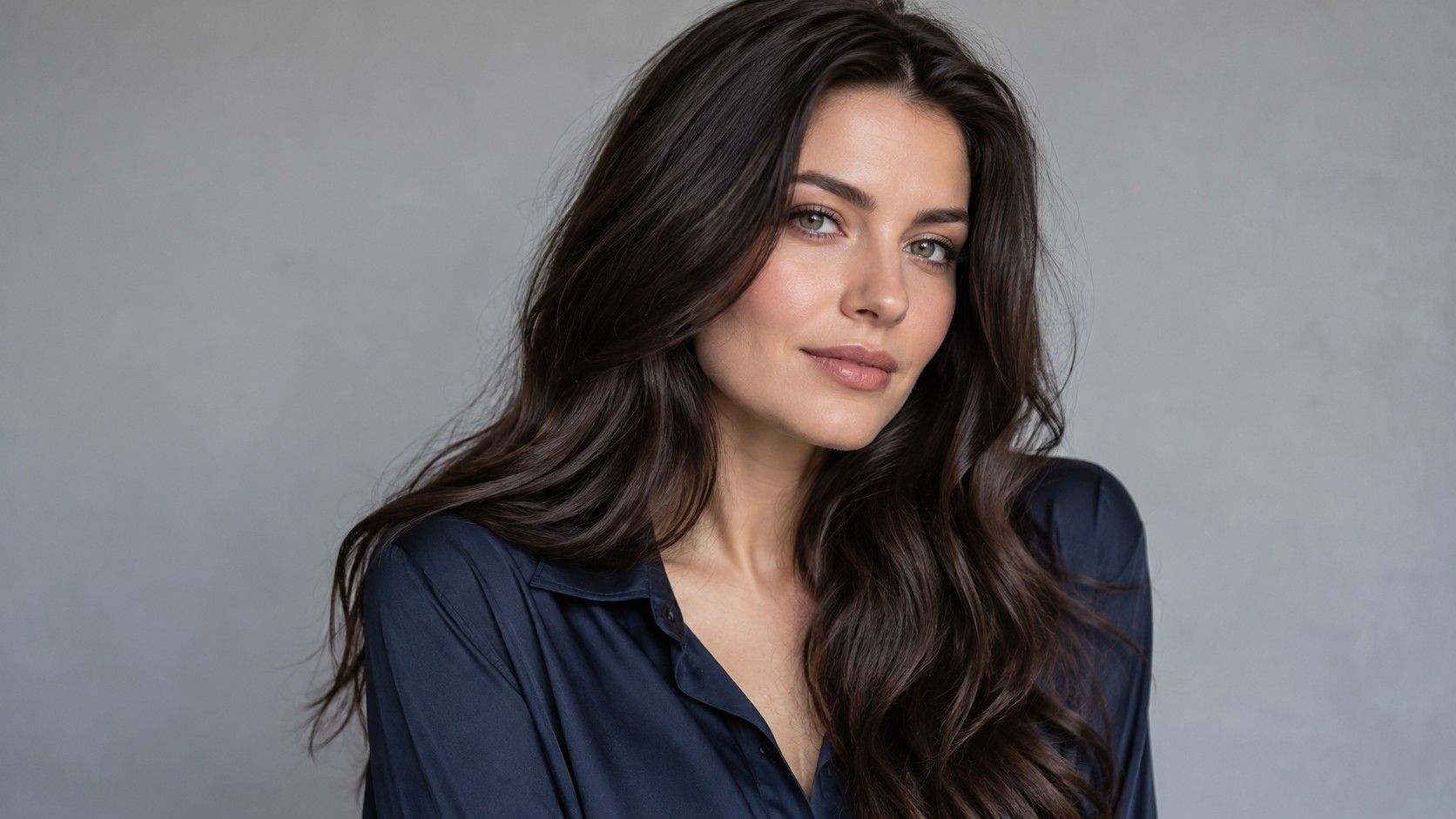
Notice whether you want a softer frame or a sharper one. A dark espresso can increase the difference between hair and skin, while a medium brown can reduce it. Neither result is automatically better. Your eyebrows, usual makeup and preference for contrast matter more than matching a generic picture of olive skin.
Compare brunette shades at the same depth
For a fair comparison, put a neutral medium brown beside a cooler and a warmer version at roughly the same darkness. Comparing black ash brown with light caramel changes two things at once. If the lighter option looks better, you still will not know whether warmth or depth made the difference.
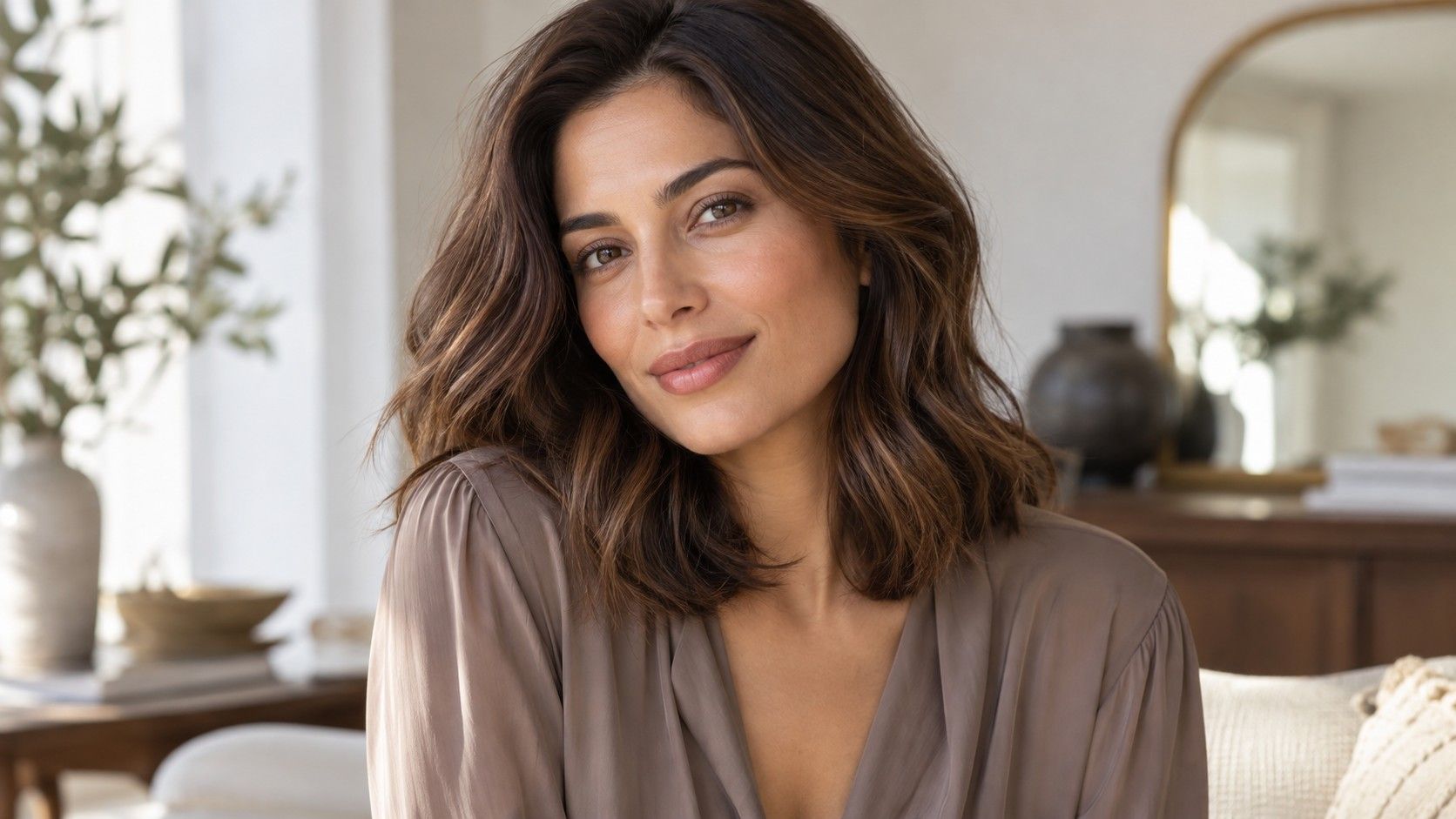
A neutral brunette is a practical reference point when both extremes seem wrong. Strongly ashy brown can make some complexions appear dull or greener in a preview; an orange-heavy chestnut can overwhelm others. These are possible visual effects, not fixed responses of olive skin. Judge the face in the whole image instead of inspecting the hair swatch alone.
Pay attention to the hair immediately beside the cheeks. Warm highlights through the ends have a different effect from a golden fringe. If you like chestnut in a photograph but dislike the glow at your temples, a deeper neutral frame with warmer lengths may be a better reference to discuss than an all-over copper brown.
Describe the result in ordinary language: “This brown is the right darkness, but I want less red,” or “I like the warmth at the ends, not around my forehead.” Those observations are more precise than asking for the best hair color for olive skin tone. Shade names vary, while your comparison photographs show the actual distinction.
| If the preview looks… | Try this comparison | What it helps isolate |
|---|---|---|
| Too green or gray beside the face | Neutral brown beside the same depth of ash brown | Whether strong coolness is the issue, rather than darkness |
| Too yellow around the jaw | Muted beige beside brighter gold at the same lightness | Whether reducing saturation gives a more comfortable warm option |
| Too flat across the whole head | Retained root and deeper underside beside all-over blonde | Whether missing depth is making the blonde feel disconnected |
Choose blonde by contrast, not by a skin label
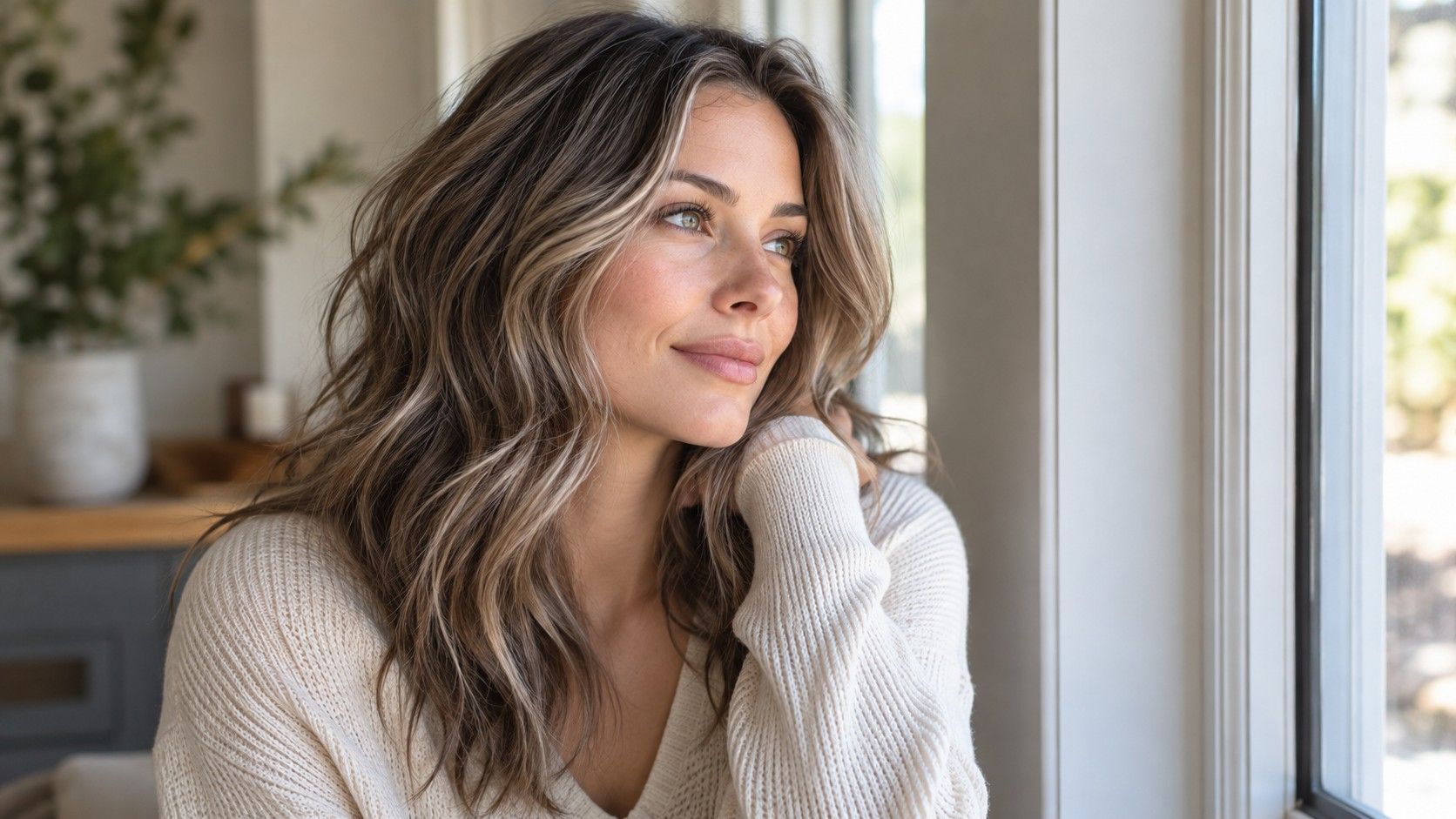
Olive skin does not rule out blonde. The difficult question is how light, how warm and how much of the head you want to change. Beige blonde, deeper golden blonde and cooler dark blonde create different frames. An almost white overlay can look striking on screen while concealing the roots and texture that would remain visible in real life.
Start with a dark blonde or a few lighter pieces if you are unsure about losing depth. A retained root can connect the new shade to darker brows and make the comparison feel less abrupt. This is a design choice, not a promise of easy maintenance: the placement and your starting hair color still determine the work involved.
When researching the best hair color for warm olive skin, include a restrained golden option and a neutral beige one. Look for a face that appears clear without requiring the photograph to be brighter. If the golden preview looks yellow beside the jaw, reduce saturation before abandoning blonde altogether.
Bring a reference for the parts you want to keep dark as well as the blonde you like. Ask a colorist what is realistic with previous dye in the lengths. A filter cannot show how an old dark color will lift, whether the ends will match the roots, or how many appointments a large change may require.
Test copper and red without letting the hair dominate
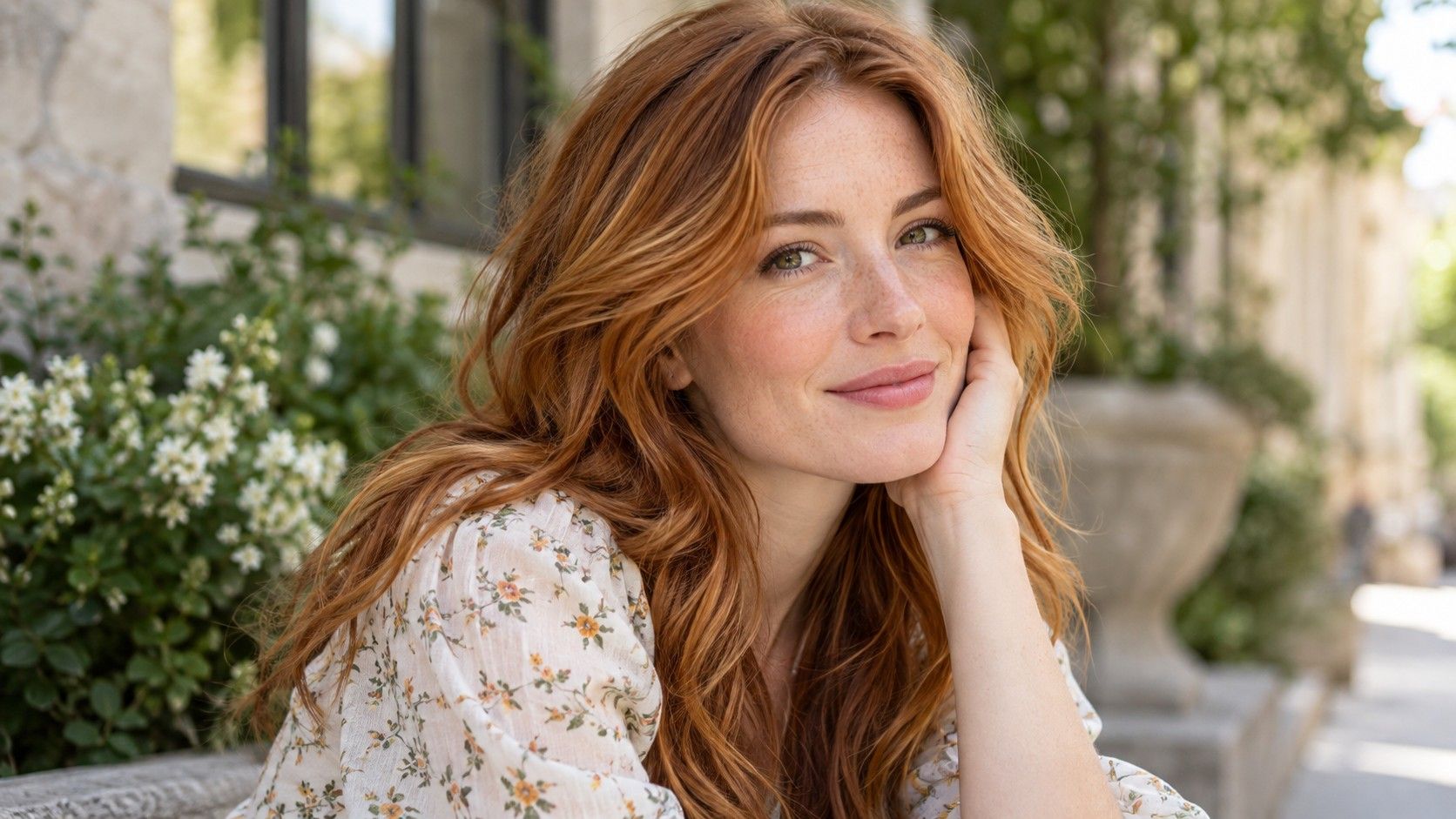
Copper can be appealing against olive skin, particularly if you enjoy a visible color statement. Compare a muted copper brown with a brighter orange copper before deciding how far to go. Keep the camera exposure constant. Bright red hair can become the strongest element in a portrait even when the shade is not especially dark.
Look at both the cheeks and the area around the mouth. Does the preview seem to add warmth you like, or does it make the surrounding skin look gray by comparison? There is no universal answer. A shirt in a similar orange can also influence your judgment, so repeat the test in a neutral top.
Auburn is often a useful middle comparison between brunette and copper, but the name covers a wide range. Some examples are mostly brown with a red reflection; others are clearly red. Save photographs that show the hair in indirect daylight, rather than relying on the color name under an indoor salon photograph.
If the vivid version wins, consider whether you like it with the clothes and makeup you actually wear. A color that looks excellent in one carefully styled image may feel demanding every morning. The preview should help you identify that preference before the appointment, not persuade you that every bold option needs to become a permanent change.
Plan for roots, gray and the color already there
Age does not create a separate undertone rule. Searches for the best hair color for olive skin over 50 often lead to blanket advice to go lighter, but the useful questions are more individual. How much gray do you want to show? How much contrast do you enjoy? How frequently do you want to deal with a visible root line?
Compare the same proposed shade with a slightly lighter root and with a deeper root. This will not accurately simulate gray coverage, but it can clarify whether a solid dark outline is what you want. A softer transition may appeal if strong contrast bothers you; someone else may prefer the definition of a dark brunette.
Write down your recent dye history, including home color, salon work and any areas that are much lighter. Bring that information with the preview. Two heads of hair can look equally brown in a photo yet behave differently during a color service because the underlying history is different.
Finish with two or three references rather than a folder of twenty unrelated looks. Label one for depth, one for warmth and one for placement if necessary. Your strongest shortlist is the one you can explain: which part flatters your face, what you dislike, and what upkeep you are prepared to accept. That is a sounder decision than a single supposedly perfect shade for all olive skin.